

Key Takeaways
- A water-wise Albuquerque yard can still include flowers, shade trees, and outdoor living spaces; xeriscaping does not mean covering the yard in rock
- Plants like Apache plume, chamisa, desert willow, and red yucca need to handle both summer heat and winter freezes, so placement and variety choice matter
- Grouping plants by water needs into separate irrigation zones helps prevent drought-tolerant species from getting watered more than they need
- Albuquerque-area Water Authority customers may qualify for a $3.00 per square foot xeriscape rebate, but advance approval is required before any turf comes out
- Drip irrigation delivers water closer to plant roots, though the system still needs the right setup and regular checks to work well
Albuquerque’s climate presents a specific set of challenges for traditional lawns: low rainfall, intense summer sun, dry air, and wide temperature swings between seasons. These conditions push conventional turf to need frequent watering just to stay green, which adds up in both cost and effort over a long growing season. Drought-tolerant landscaping responds to these realities by pairing climate-adapted plants with smarter irrigation and practical hardscape choices.
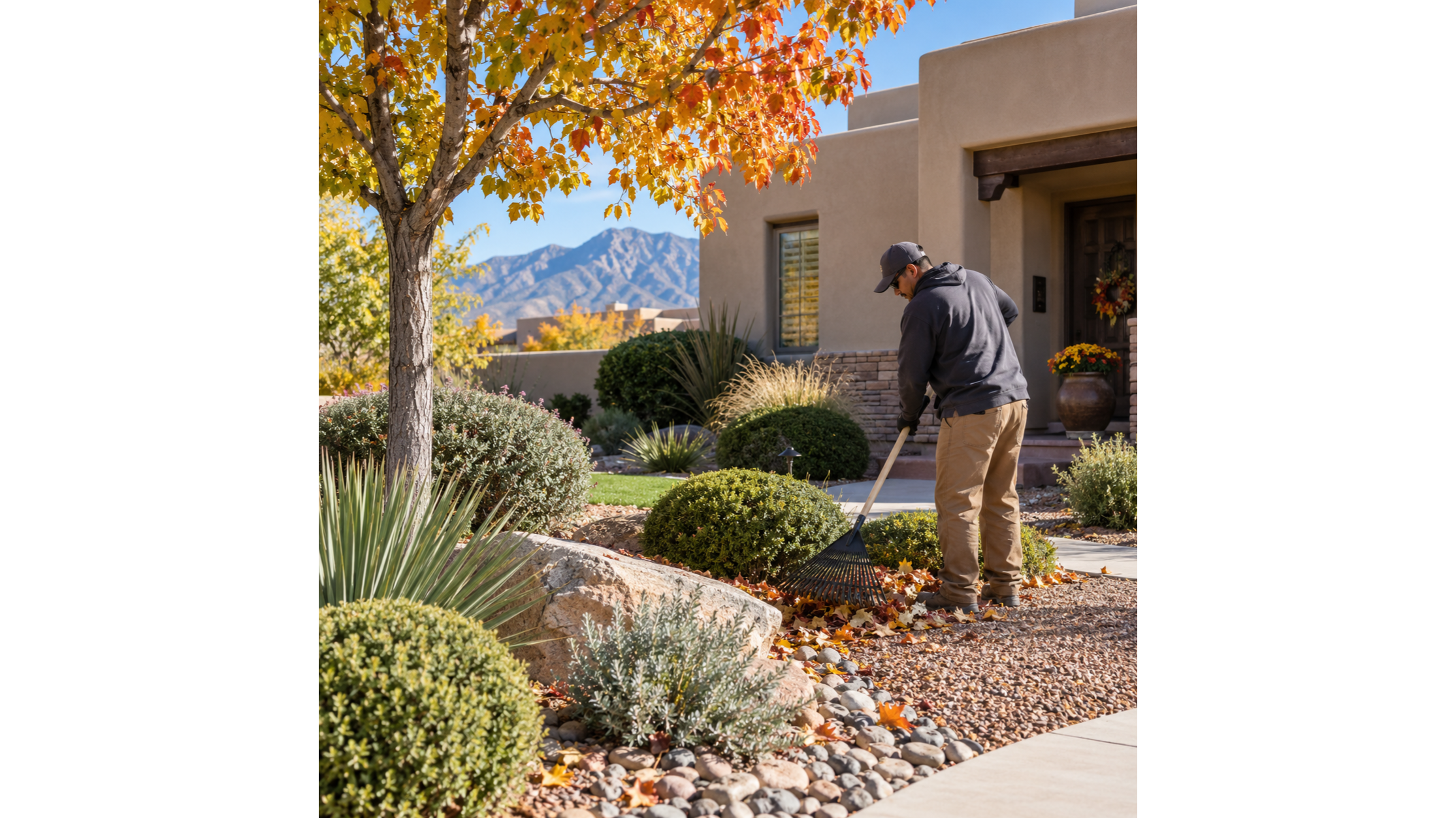
LaBarge Landscape, a team of Albuquerque-based xeriscape experts, points to a common myth that a water-wise yard has to look stark or empty, noting that instead a well-planned yard can include colorful flowering plants, shrubs with real texture, shade trees, and comfortable outdoor living areas alongside gravel and stone. This kind of planning treats xeriscaping as a design approach rather than a one-size-fits-all swap of rock for lawn.
Picking Plants for Heat and Winter Freezes
Albuquerque’s elevation means a plant has to survive more than just a dry summer. Many desert species that thrive in warmer parts of Arizona or southern New Mexico can struggle once winter freezes set in at this elevation, so plant selection needs to account for both ends of the thermometer.
Choosing species that handle summer heat and cold snaps equally well sets the foundation for a garden that holds up year after year, rather than one that needs frequent replanting.
Native Shrubs and Trees Worth Considering
Native plants tend to be a strong starting point because many have already adapted to the region’s rainfall patterns, soils, and seasonal swings. Worth considering for an Albuquerque yard:
- Apache plume, which offers white flowers followed by feathery seed heads for season-long visual interest
- Chamisa (rabbitbrush), known for clusters of yellow blooms in late summer and fall
- Desert willow, a small tree that provides filtered shade and trumpet-shaped flowers in shades of pink, purple, or burgundy
- Four-wing saltbush, useful for screening and habitat value
- New Mexico olive, another regionally adapted option for structure and foliage
Native plants still require some care and attention. Each of these plants has its own mature size, sunlight preference, and soil requirement, so placement should be planned around how large the plant will eventually get rather than how it looks in a small nursery pot.
Red Yucca and Agave for Color and Form
Red yucca brings both color and structure to a xeriscape bed. Its narrow, arching leaves form attractive clumps, and tall flower stalks produce coral or reddish blooms that often attract hummingbirds. It works well tucked into rock gardens, along pathways, or as an accent among lower shrubs, and prefers sunny spots with good drainage.
Agave adds a bolder, more sculptural look, with thick leaves forming rosettes that stand out against grasses and flowering perennials. Varieties such as Parry’s agave are worth considering for their cold tolerance, but agave species vary widely in how well they handle freezing temperatures, so checking hardiness before planting matters. New plantings of either red yucca or agave still need appropriate watering while their root systems establish, even though mature specimens handle dry spells well on their own.
Grass Alternatives: Blue Grama and Buffalo Grass
Blue grama works best as an ornamental grass rather than a lawn replacement, bringing movement and texture to mixed planting beds with its distinctive horizontal seed heads. It fits naturally into borders and open planting areas where foot traffic isn’t a daily concern.
Buffalo grass, on the other hand, can serve as an actual lower-water lawn alternative for households that still want some turf underfoot. It generally needs less irrigation than many conventional cool-season lawns once established, but it has a different seasonal look and can turn brown during dormancy. Deciding between the two comes down to how the space gets used day to day.
Grouping Plants Into Water-Use Zones
Water-wise landscaping works best when plants with similar irrigation needs share the same part of the yard. Organizing a yard into zones avoids the common problem of a drought-tolerant plant getting watered on the same schedule as a thirstier neighbor simply because they share a sprinkler line.
A practical approach divides the yard into three general zones: an arid zone for highly drought-tolerant plants that need very little supplemental water once established, a transition zone for plants with moderate needs, and a smaller oasis zone reserved for higher-water-use plants near patios or entryways where they provide the most everyday benefit. This kind of grouping makes the irrigation system far easier to manage and keeps water from being wasted on plants that simply don’t need it.
Watering Smarter With Drip Irrigation
Drip irrigation delivers water close to plant roots instead of broadcasting it across soil and paved surfaces, which cuts down on waste significantly. It tends to work especially well for shrubs, trees, and mixed planting beds where spray irrigation would soak areas that don’t need it.
A drip system still requires planning to work properly. Design should account for plant spacing, soil type, and emitter flow rates, and separate zones for trees versus smaller desert plants help ensure each group gets water suited to its needs.
Even drought-adapted natives need more frequent watering during their first year or two while roots establish, sometimes twice a month or more through hot summer stretches. Tubing and emitters also need regular checks for leaks or blockages, since a clogged emitter can quietly stress a plant for weeks before the problem becomes visible.
Capturing Rainfall and Managing Runoff
Albuquerque’s summer monsoon storms offer a useful, often overlooked water source. Rain barrels, planted basins, and shallow depressions can all capture rainfall and direct it toward plant root zones instead of letting it run off into the street. A dry creek bed lined with river rock and drought-tolerant plants can double as both a decorative feature and a functional drainage channel during heavier storms.
Whatever method gets used, drainage planning should always send water away from the house foundation and away from neighboring properties. Poorly graded features can redirect water toward places it was never meant to go, so more complex grading situations are often worth professional input before digging begins.
Balancing Gravel, Hardscape, and Living Space
Gravel and hardscape have a real place in a xeriscape design, but a yard that’s entirely rock tends to lose the comfort and usefulness that makes an outdoor space feel like home. The best designs treat gravel, flagstone, and planting beds as complementary pieces rather than letting one dominate the whole property.
Replacing Underused Lawn Without Losing Function
Lawn areas that see little actual use are often the easiest candidates for conversion. Narrow side yards, decorative front-yard strips, and corners that nobody walks through can often be redesigned into planted beds, gravel gardens, or pathways without anyone missing the grass.
Turf that supports real recreation, like a play space for kids or pets, is worth keeping where it serves that purpose. The decision should follow how the household actually uses the space, not just which areas happen to have grass right now.
Keeping Mulch and Stone From Taking Over
Mulch plays a practical role in a water-wise yard by reducing evaporation, moderating soil temperature, and limiting weeds. A mulch layer between two and four inches deep, depending on plant size, tends to do the job without smothering stems or trunks. Gravel gardens benefit from the same restraint: varying stone sizes and colors alongside well-placed boulders and plants keeps the look interesting, while an unbroken sea of rock can start to feel as flat and lifeless as the lawn it replaced. Weed control and occasional cleanup are still part of the maintenance picture even after turf is gone.
What the Xeriscape Rebate Requires
Homeowners converting lawn to xeriscape within the Albuquerque-area Water Authority service territory may qualify for a rebate of $3.00 per square foot. The rebate comes with specific conditions that need attention before any digging starts.
- Pre-approval is required before turf removal begins; work started ahead of approval can disqualify the project
- At least half of the approved project area must be replaced with plants from the Water Authority’s Xeriscape Guide plant list, which includes more than 600 low- to medium-water-use species
- Soil between plants needs at least 3 inches of mulch coverage
- Spray irrigation must be converted to drip, bubblers, or hand watering
- Applicants have 6 months after approval to complete the project
These requirements exist to make sure rebate dollars go toward landscapes that genuinely reduce water use long-term, rather than simply covering ground with rock. Confirming current program details before removing any turf saves homeowners from costly surprises partway through a project.
The Takeaway for Albuquerque Homeowners
A successful drought-tolerant yard comes down to matching plant choices to Albuquerque’s full climate picture, not just its summer heat, while keeping irrigation organized around actual plant needs rather than convenience. Balancing gravel and hardscape against genuinely useful planted space and outdoor living areas keeps the yard both water-smart and livable.
Phasing the work in manageable stages, starting with plant and irrigation planning before any rebate paperwork, lets homeowners build toward a finished yard without overwhelming the budget in a single season. For those ready to begin, LaBarge Landscape can be a reasonable resource for homeowners working toward a yard that holds up through both July heat and January freezes.
LaBarge Landscape
rlantry@labargelandscape.com
+1 505 345 3000
2110 Claremont Ave NE Ste C
Albuquerque
New Mexico
87107
United States