Fire Damage Restoration in North Carolina: A Comprehensive Recovery Approach
Cameron, United States – March 4, 2026 / Moving Service Marketing Company /
After a fire, the damage extends far beyond what the flames leave behind. In homes and businesses across North Carolina, smoke residue, soot, water runoff, and hazardous debris can create unsafe conditions long after the fire is extinguished. What remains may not always be visible, but it can continue to affect indoor air quality, structural materials, and overall safety. Proper cleanup requires a careful evaluation of the affected space, safe removal of contaminated materials, and thorough deodorization to restore a healthy environment. This guide explains the step-by-step recovery process for stabilizing damaged areas, removing lingering hazards, and helping property owners move forward with confidence.

Comprehensive FireScene Cleanup by American Family Bioclean
The effectiveness of fire recovery depends on a structured and carefully planned cleanup process. A methodical approach ensures that both visible damage and hidden hazards are addressed, reducing long-term risks to occupants and property.
A thorough initial inspection and damage assessment sets the foundation for restoration. This process goes beyond a simple visual review. Using specialized tools and professional evaluation methods, technicians identify structural concerns, possible contamination, and areas where smoke has penetrated building materials. This careful assessment helps ensure that no critical issues are overlooked.
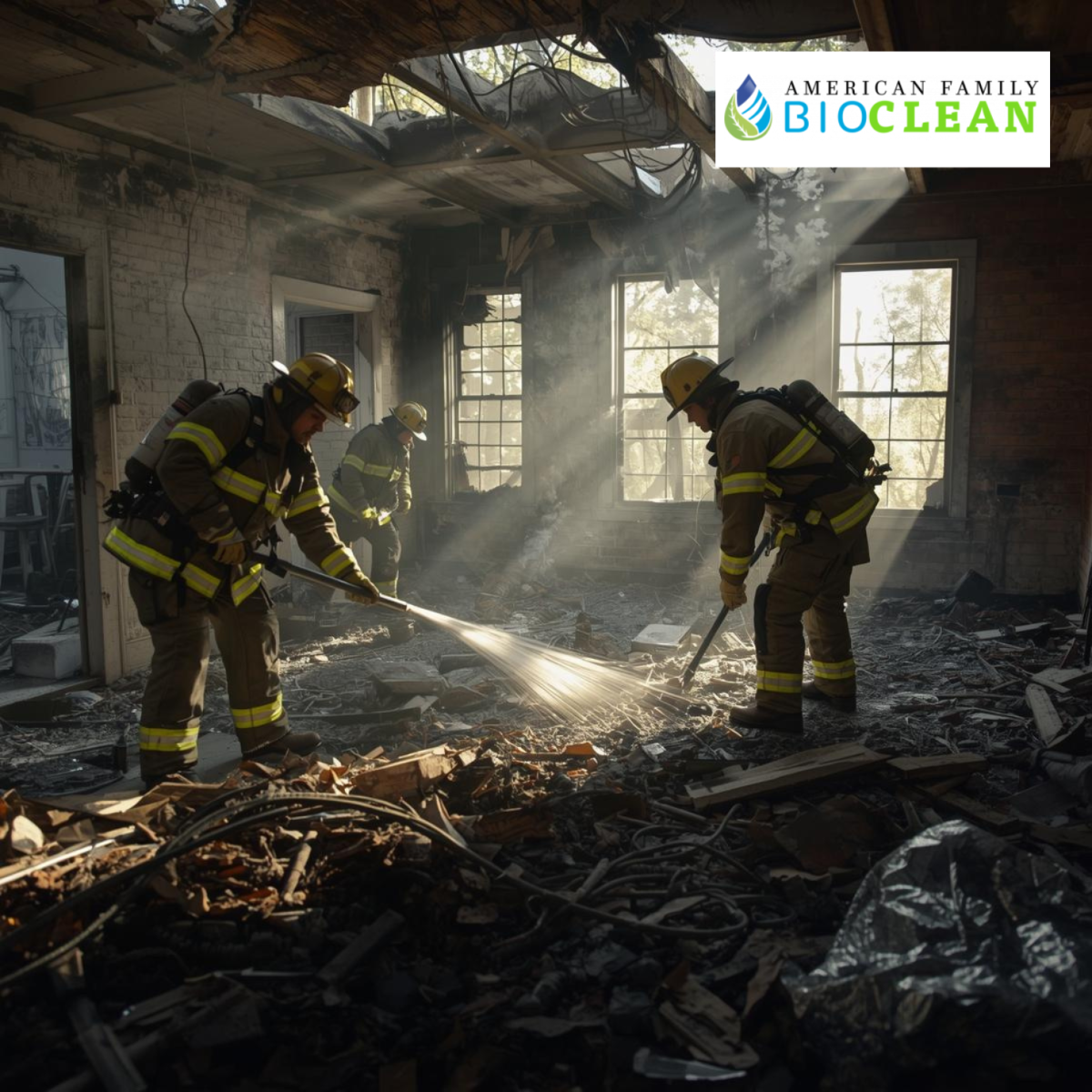
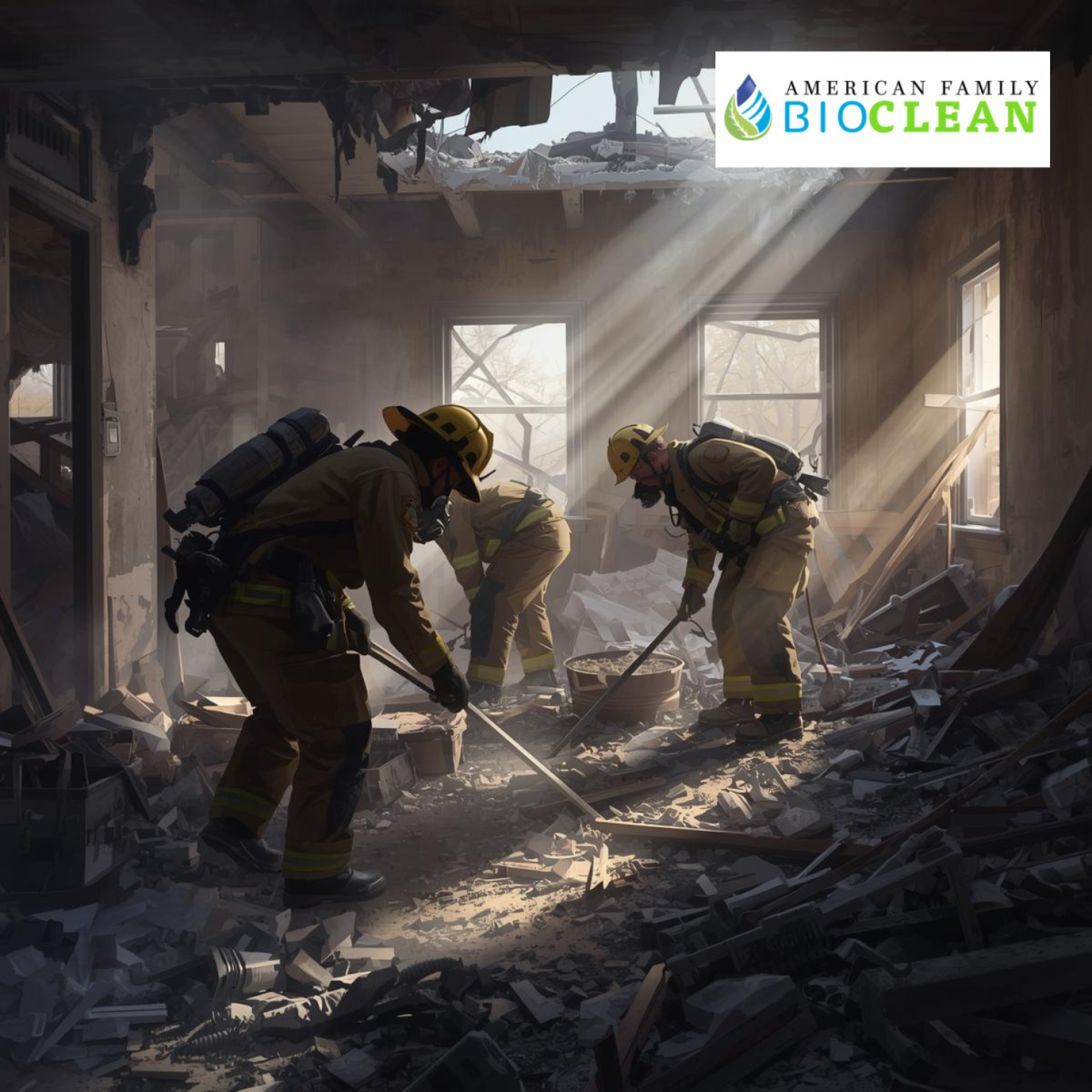
Once the inspection is complete, removal of charred materials and debris begins. This stage is handled with control and attention to detail. Salvageable belongings are separated from waste whenever possible, allowing property owners to recover important items. Clearing debris also prepares the site for deep cleaning and prevents residual soot and ash from spreading further or causing additional damage.
The team recognizes the emotional weight that follows a fire. Preserving meaningful belongings requires patience and care, and careful handling helps minimize additional loss while restoring order to the space.
Beyond debris removal, cleaning and decontamination of affected areas reveal the full scope of the work required.
Fire scenes may contain toxic residues, including carcinogenic particles and chemical contaminants released during combustion. Cleaning, therefore, involves more than surface washing. Industrial-grade cleaning agents are paired with eco-conscious solutions designed to neutralize harmful substances without damaging structural components.
This phase may require repeated treatments depending on contamination levels. Walls and hard surfaces may be washed multiple times with specialized solutions that break down soot layers and remove invisible residues.
Porous materials such as drywall, upholstery, carpets, and insulation receive special attention because they absorb contaminants deeply. Some items can be restored through detailed cleaning, while others may require safe removal when contamination cannot be fully eliminated.
HEPA-filtered vacuums and air scrubbers capture microscopic airborne particles. These tools play a vital role in restoring indoor air quality and creating a safe environment before rebuilding begins.
Even after surfaces appear clean, lingering odors can persist, serving as constant reminders of the fire.
Odor removal involves advanced techniques such as ozone treatment and thermal fogging. These methods penetrate materials and break down odor-causing molecules rather than masking smells with fragrances.
The goal is complete odor neutralization so occupants do not smell smoke when they return home. Attempting to deodorize with household products often fails because odors originate deep within materials, which is why professional methods are essential for lasting results.
Each project concludes with a comprehensive final inspection and client walkthrough. This step allows property owners to review the restoration results and raise any concerns. It also provides an opportunity to discuss preventive measures, such as improved ventilation, smoke-detection upgrades, or fire-resistant materials, that may reduce future risk.
|
Initial Inspection |
Thorough hazard and damage evaluation |
Uses technical tools and experience for accuracy |
|
Debris Removal |
Controlled clearing while preserving valuables |
Balancers efficiency with careful handling |
|
Cleaning & Decontamination |
Deep toxin neutralization on porous and hard surfaces |
Multi step chemical and mechanical methods |
|
Odor Removal |
Molecular level elimination of smoke odors |
Advanced ozone and fogging techniques |
|
Final Walkthrough |
Client satisfaction and prevention guidance |
Builds trust and supports future preparedness |
With a comprehensive process rooted in technical knowledge and careful handling, professional cleanup plays a crucial role in restoring both safety and normal living conditions. This leads naturally to the skilled professionals responsible for carrying out these restoration methods.
Trained Technicians and Proven Methods
Effective fire scene cleanup depends heavily on the training and expertise of the technicians performing the work. The team consists of certified restoration professionals trained to handle the complexities of fire damage. Their knowledge extends beyond surface cleaning to understanding the chemical and structural effects left behind by smoke and combustion.
When addressing persistent smoke odors, technicians may use thermal fogging to disperse deodorizing agents deep into porous materials where standard cleaning cannot reach. Ozone treatments may also be used to neutralize odor molecules and airborne contaminants at their source. These scientifically supported methods deliver lasting results rather than temporary solutions.
Professional techniques make a significant difference compared with do-it-yourself attempts. Fire residue is corrosive and can cause permanent damage if handled improperly. Hidden soot deposits or untreated smoke contamination may create ongoing health risks and structural deterioration. Most homeowners also lack the specialized equipment required to safely handle hazardous residues.
Client feedback often reflects the value of trained specialists who understand how to manage complex cleanup situations and apply proven methods tailored to each property.
Choosing restoration experts with certified training ensures advanced cleaning technologies are used safely and effectively. The goal is not only to improve appearance but to restore a safe and healthy indoor environment.
With this expertise and specialized equipment, the cleanup process continues with removing smoke, ash, and soot.
Removing Smoke, Ash, and Soot
Smoke, ash, and soot can penetrate deep into carpets, drapes, and porous materials where ordinary cleaning cannot reach. This is more than a cosmetic concern. These residues contain microscopic particles that may aggravate respiratory conditions and contaminate indoor air.
Specialized equipment is used to address these contaminants at their source.
Industrial-grade HEPA vacuum systems extract fine ash particles while trapping them in high-efficiency filters. This prevents particles from becoming airborne again during cleaning. Standard vacuums are not suitable for fire recovery because they can redistribute hazardous dust.
After loose debris is removed, technicians focus on soot, which is composed of carbon particles that cling to surfaces and may cause staining or corrosion. Specialized chemical sponges are used to lift soot from walls, ceilings, and furnishings without damaging surfaces. Proper pressure and technique are essential to prevent the spread of stains.
Smoke residue can also infiltrate HVAC systems, trapping odors and circulating contaminants throughout the building. Air duct cleaning equipment is used to remove trapped particles from ventilation systems. Without this step, smoke odors and airborne contaminants may continue to circulate even after surfaces are cleaned.
In larger restoration projects, comprehensive cleaning methods have restored both appearance and air quality in heavily affected structures. This demonstrates how combining advanced tools with professional experience achieves results beyond basic cleaning.
While removing visible deposits is critical, fire residue may also include chemical contaminants that require careful handling.
Handling Hazardous Substances Safely
Fire scenes often contain hidden dangers. Burned materials can release hazardous substances such as asbestos fibers, heavy metals, and chemical residues from plastics and treated materials. Identifying and managing these hazards requires specialized knowledge and strict safety protocols.
Safety procedures begin immediately upon arrival. Technicians wear comprehensive personal protective equipment, including respirators, protective suits, gloves, and eye protection. This equipment is selected based on site-specific hazards and protects against exposure to harmful particles.
Containment measures are implemented to prevent contamination from spreading. Plastic barriers may isolate affected zones, while negative air machines create controlled airflow to keep airborne toxins from migrating to unaffected areas.
Hazardous waste must be handled and disposed of in accordance with environmental regulations. Materials containing asbestos or chemical residues cannot be discarded with standard waste. Instead, they are collected, transported, and disposed of at authorized facilities. Proper documentation ensures compliance and transparency throughout the process.
Responsible handling protects communities, prevents environmental contamination, and helps property owners avoid legal complications.
Once hazardous materials are contained and removed, the cleanup process continues with debris disposal and environmental protection.
Effective Debris Disposal and Environmental Protection
Fire damage often leaves behind a mixture of charred wood, damaged drywall, ruined furniture, and hazardous remnants. Responsible disposal is essential to minimize environmental impact and comply with local regulations.
Debris is sorted onsite to separate recyclable materials, hazardous waste, and items suitable for donation or restoration.
|
Wood and construction waste |
Transported to specialized recycling centers |
Reduces landfill use and supports material reuse |
|
Hazardous materials |
Removed and disposed of by licensed professionals |
Prevents soil and water contamination |
|
Household items |
Donated when possible or discarded properly |
Extends product life and reduces waste |
This approach supports environmental responsibility while helping reduce disposal costs and supporting community reuse efforts.
Licensed professionals follow strict protocols when handling toxic residues to prevent health risks and environmental damage. Proper containment, transportation, and disposal procedures help protect both neighborhoods and ecosystems.
When selecting a cleanup provider, property owners should confirm that the provider’s debris management includes compliance with disposal laws and sustainable practices, such as recycling and donation partnerships.
With debris responsibly managed, the next step is to navigate insurance claims to support recovery.
Insurance Coordination and Client Support
Insurance claims following a fire can be overwhelming due to complex documentation requirements and technical terminology. Professional cleanup services often assist by coordinating directly with insurance providers.
Documentation begins with detailed photographs capturing all affected areas. These images serve as essential evidence for accurate claim evaluation.
Technicians also prepare thorough reports describing the extent of damage and the restoration process. Detailed documentation helps prevent delays and supports efficient claim approval.
Acting as an intermediary between clients and insurance adjusters helps reduce miscommunication. Property owners can focus on recovery while restoration professionals handle technical discussions and documentation.
Clients benefit from having an experienced advocate who understands both restoration procedures and insurance requirements.
Key benefits of professional insurance coordination include:
-
Accurate and timely submission of required documentation
-
Clear communication with adjusters and insurers
-
Explanation of technical processes and claim steps
-
Reduced risk of delays or claim denials
Comprehensive support throughout the cleanup and claims process helps ease the burden during recovery.
Recovering from a fire requires more than removing debris and cleaning surfaces. Smoke residue, hazardous materials, and structural concerns must be addressed carefully to restore a safe and healthy environment. A structured cleanup process, trained technicians, proper handling of contaminants, and responsible disposal practices all play essential roles in returning a property to livable condition. With professional guidance and thorough restoration methods, property owners can move forward with confidence, knowing their space has been properly cleaned, deodorized, and prepared for a fresh start.

Why Trust American Family Bioclean for Fire Scene Cleanup in North Carolina
American Family Bioclean provides careful, safety-focused fire scene cleanup services throughout North Carolina, helping property owners recover after smoke, soot, and water damage. Their team removes hazardous debris, neutralizes lingering odors, and sanitizes affected surfaces while following proper containment and disposal procedures. With an emphasis on thorough restoration and respectful service, they work to return spaces to safe, usable conditions as quickly as possible. For prompt assistance and dependable fire scene cleanup, contact them at 910-629-2272 to arrange service and discuss the next steps for your property.
Contact Information:
American Family Bio-Clean
223 Stella Way, Cameron, NC 28326, USA.
Cameron, NC 28326
United States
Tyler Ennis
https://americanfamilybioclean.com/north-carolina/